
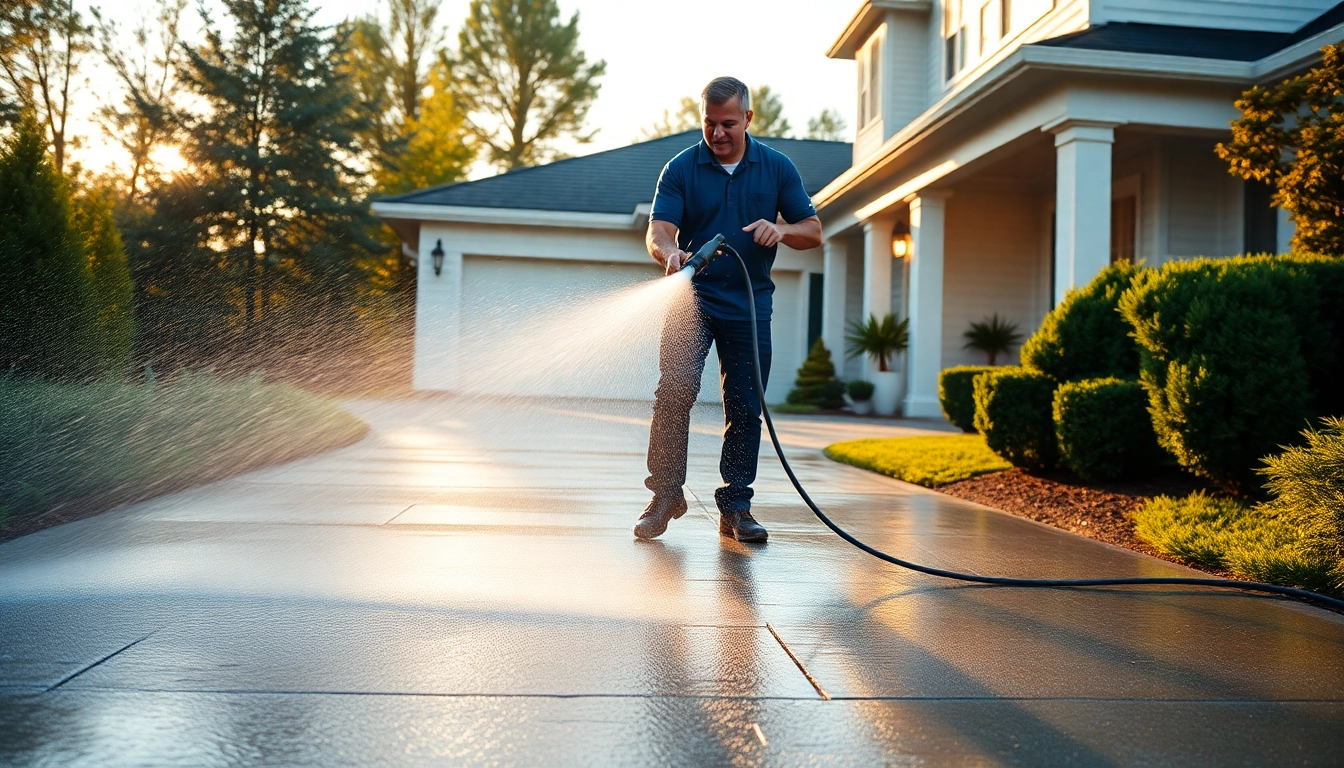
Understanding Driveway Pressure Wash Techniques
Driveway pressure washing is an effective method to restore the clean and welcoming appearance of your driveway. This process involves utilizing high-pressure water jets to remove stubborn dirt, grime, and stains that accumulate over time. From everyday wear caused by vehicles to stains from oil spills, driveway pressure wash techniques not only enhance the aesthetic appeal but also extend the life of the surface. When exploring options, driveway pressure wash services can provide comprehensive insights into the best practices for maintaining your driveway.
What Is Driveway Pressure Washing?
Driveway pressure washing involves the use of a pressure washer to clean concrete, asphalt, and other materials typically used for driveways. By applying high-pressure water—often accompanied by eco-friendly detergents—this technique dislodges dirt, mold, mildew, and tough stains, restoring the surface’s original luster. This process can be particularly useful in areas with high foot traffic or where vehicles frequently park, as these surfaces tend to gather dirt more quickly.
Benefits of Professional Driveway Pressure Washing
Using professional services for driveway pressure washing brings numerous benefits:
- Enhanced Curb Appeal: A clean driveway improves the overall look of your property and creates a positive first impression for visitors.
- Increased Longevity: Regular cleaning can help to prevent material degradation, extending the lifespan of your driveway.
- Health and Safety: Removing mold and mildew can help to create a healthier environment and reduce slip hazards.
- Time-Saving: Professionals have the experience and equipment to complete the job more quickly and effectively than a DIY approach.
Common Types of Driveway Surfaces and Their Care
Different driveway materials require specific care techniques. Here’s a brief overview:
- Concrete: The most common material, often needing high-pressure washing to remove embedded stains.
- Asphalt: Requires gentler washing to prevent damage; soft wash methods are recommended.
- Brick: Needs careful cleaning to avoid dislodging mortar; using a low-pressure wash is ideal.
Choosing the Right Equipment for Driveway Pressure Washing
Essential Tools for an Effective Pressure Wash
The tools used for driveway pressure washing significantly influence the effectiveness of the cleaning process. Essential tools include:
- Pressure Washer: A machine that provides the necessary pressure, commonly rated in PSI (pounds per square inch).
- Surface Cleaner: An attachment that helps cover more area while maintaining consistent pressure across the surface.
- Cleaning Solutions: Eco-friendly detergents that help break down grease and stains.
Recommended Pressure Washer Specifications
For effective driveway pressure washing, consider using a pressure washer with at least 2500 PSI and a water flow rate of 2.5 GPM (gallons per minute). Gas-powered units are typically preferred for their power and efficiency, especially for tougher stains.
Safety Equipment You Can’t Ignore
When pressure washing, safety should be your utmost priority. Essential safety equipment includes:
- Protective Glasses: To shield your eyes from flying debris.
- Gloves: To protect your hands from detergents and high-pressure water.
- Non-Slip Footwear: To prevent slipping on wet surfaces.
Preparing Your Driveway for Pressure Washing
Pre-Cleaning Steps: What to Do Before You Start
Preparation is crucial for achieving the best results. Here are the steps to follow:
- Clear the Area: Remove any vehicles, furniture, or other obstructions from the driveway.
- Inspect for Damage: Check for cracks or loose materials that may need repair prior to washing.
- Cover Nearby Plants: Use tarps to shield surrounding plants and flowers from soap or high-pressure water.
Identifying and Treating Stains and Marks
Before you begin pressure washing, it’s important to identify any specific stains. For oil stains, consider pre-treating with a degreaser. For organic stains, a mixture of vinegar and water can be effective.
Water Drainage Considerations
Ensure that there’s appropriate drainage for water runoff during the pressure washing process. This helps prevent flooding and allows for a more thorough cleaning.
Steps to Successfully Pressure Wash Your Driveway
Setting Up Your Pressure Washer
Start by connecting your pressure washer to a water source and turn on the machine to check for leaks. Follow the manufacturer’s instructions for setting the appropriate pressure based on your driveway material.
Technique: Maintaining Proper Distance and Angle
When pressure washing, maintain a distance of approximately 12 to 18 inches from the surface for best results. Move the nozzle in a consistent motion, overlapping each pass slightly to ensure even coverage. This technique minimizes the risk of damaging the surface.
Post-Wash Care: How to Maintain Clean Results
After washing, allow the driveway to dry completely. To maintain the clean appearance, consider applying a sealant appropriate for your surface type which helps to protect against stains and wear from traffic.
Future Trends in Pressure Washing Services
Emerging Technology in Pressure Washing
The pressure washing industry is evolving with the integration of advanced technology such as robotic pressure washers and smart systems that allow for automated cleaning processes. These innovations not only optimize cleaning efficiency but also reduce labor costs.
Sustainable Practices in Driveway Cleaning
With increased environmental awareness, many companies are adopting sustainable practices. This includes using biodegradable cleaning agents and implementing water reclamation systems to minimize waste.
Adapting to Customer Needs in 2025 and Beyond
As consumer demands shift towards personalized services, pressure washing companies are adapting by offering tailored cleaning plans based on specific customer needs. This includes options for both residential and commercial clients, ensuring satisfaction and high-quality service.


